






Updated
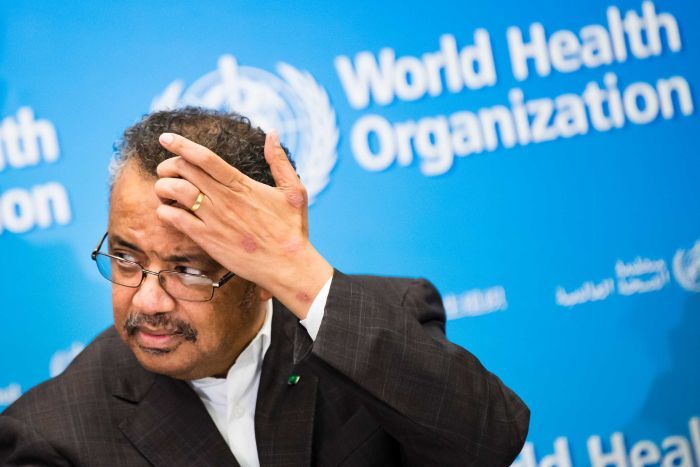
The World Health Organisation division leading the global response to the coronavirus outbreak is so chronically underfunded it has repeatedly been found to pose a “severe” level of hazard to the organisation, deemed “unacceptable” by its internal risk policy, recent audits reveal.
Key points:
- WHO is still struggling to implement reforms in the fallout of its response to a deadly Ebola outbreak six years ago
- There has been a surge in internal corruption allegations across the whole of the organisation
- Critics say the initial response to coronavirus was far too slow
The WHO Health Emergencies Program, established in 2016, scored the highest-level risk rating in 2018 and 2019 because the “failure to adequately finance the program and emergency operations [risks] inadequate delivery of results at country level”.
The ABC can also reveal the WHO is still struggling to implement vital reforms in the fallout of its widely criticised response to a deadly Ebola outbreak six years ago.
As of May last year, 59 of the 90 recommendations made by its internal auditors were yet to be completed, including 38 “high-significance” reforms, some of which had suffered from “low implementation effort”.
There has also been a surge in internal corruption allegations across the whole of the organisation, with the detection of multiple schemes aimed at defrauding large sums of money from the international body.
An external committee has warned the WHO it is facing “decreasing internal control compliance”.
A separate “principal risks” assessment of March 2019 says deficient funding of the WHO Health Emergencies Program means it risks the “failure to adequately manage multiple, simultaneous or consecutive [high level] emergencies, resulting in poor performance and results at a country level”.
According to the WHO’s internal risk management policy, this means the program poses the highest level of danger, and states: “The risk is unacceptable and is escalated to the highest approval authority, i.e. reported to the DG [Director General].”
A WHO spokeswoman said: “We have made strides in improved raising of finance and the fact that we have managed multiple grade-three emergencies simultaneously suggests that while a risk, we have managed it.”
But the emergency program is “in a constant state of crisis,” according to Adam Kamradt-Scott, a global health security expert with Sydney University.
“When WHE was set up in 2016 they already had three or four level-three category crises they were dealing with,” Dr Kamradt-Scott said.
“They had a series of emergency health crises to deal with from day one … [and yet] they have consistently been forced to hold donor meetings to get more money into the fund.”
David Heymann, who worked at WHO for 22 years, told the ABC the emergency arm of the WHO was underfunded.
“It’s not prioritised properly,” Professor Heymann said.
The WHO’s own inspectors last year found the Geneva headquarters of the organisation needed to do more to ensure it could fulfil its mandate during health emergencies.
“There is a need to further strengthen operational support by headquarters and regional offices to country operations, particularly in the context of emergency operations,” their report said.
Slow to respond to coronavirus
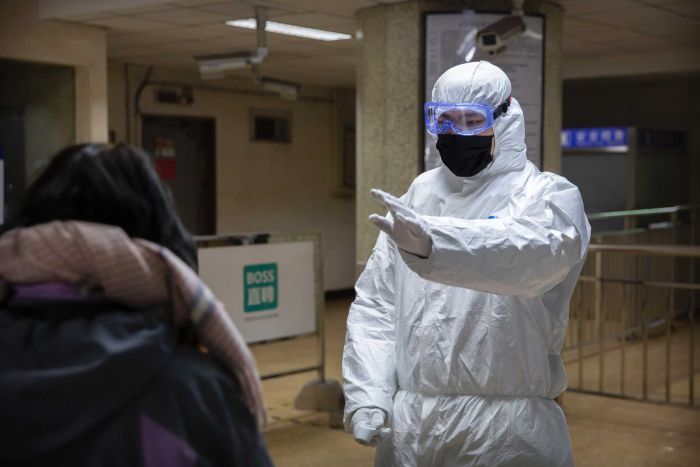
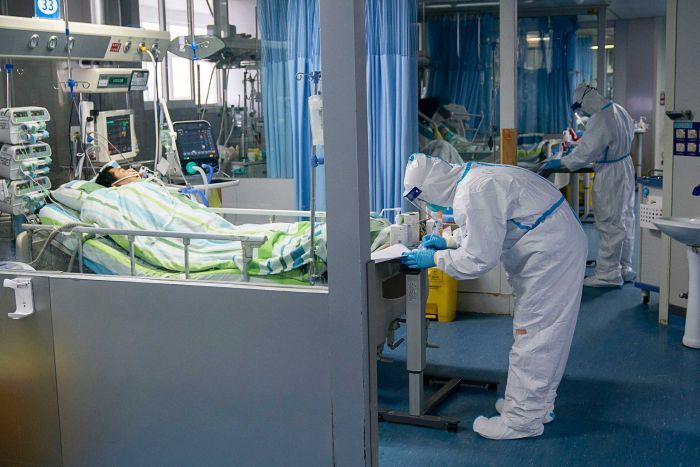
It is these emergency operations which are now being tested in the WHO’s attempts to contain the coronavirus outbreak in China and around the world. Already there have been criticisms the organisation did not earlier declare a public health emergency of international concern (PHEIC).
Lawrence Gostin, who studies global health law at Georgetown University, recently said the world had been “deceived” by the WHO’s decision not to declare a public health emergency at an earlier stage of the coronavirus outbreak.
The WHO’s declaration was only made on January 30, 10 days after it was first confirmed the virus could spread from person to person and eight days after it applauded China’s efforts to tackle the disease.
A WHO spokeswoman told the ABC the emergency committee convened on January 22, but “at the time of the first meeting not all members of the committee felt that there was adequate evidence/information to support recommending declaration of a PHEIC”.
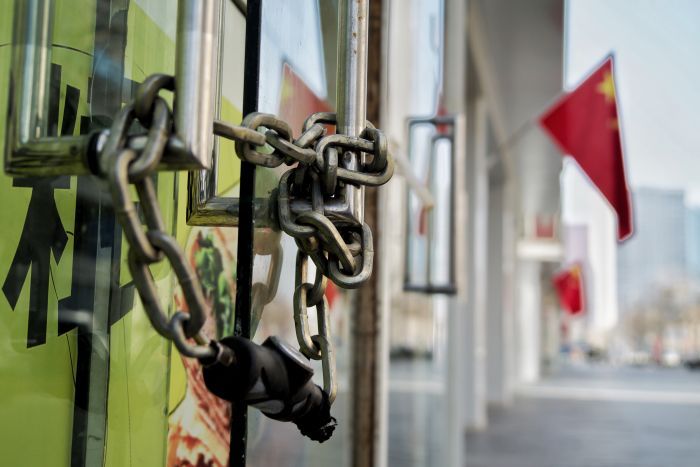
At about this same time, China had begun the institution of a sweeping quarantine regime that restricted the movement of millions of its citizens.
“Myself and other public health experts, based on what the World Health Organisation and China were saying, reassured the public that this was not serious, that we could bring this under control,” Professor Gostin told the Washington Post.
“We were given a false sense of assurance.”
Ranu Dhillon of the Harvard Medical School told the ABC it was possible that “political concerns factor into whether or not to declare it”.
“Certainly they could have declared some days before the time they did, because at that time it was clear there was an escalation of transmission within China,” Dr Dhillon said.
Professor Heymann said an earlier declaration would not have made a material difference to the management of the outbreak, and commended the organisation’s work to combat the spread of the virus.
He also said the form and nature of the PHEIC declaration needed to be reconsidered.
“There’s confusion around the world about the declaration,” he told the ABC.
“What does it really mean and why does it always appear to be delayed rather than on time?”
In a recent British Medical Journal article, Dr Kamradt-Scott urged the WHO to institute greater transparency about how it decided to declare a public emergency.
He cited the case of an Ebola outbreak in the Democratic Republic of the Congo two years ago. During that crisis, a WHO technical committee charged with recommending such a declaration met in October 2018 and April 2019 and “advised against declaring a PHEIC, despite the criteria for doing so appearing to be met on both occasions”.
“Until there is increased transparency around [emergency committee] deliberations, questions about irrelevant considerations, undue influence and political interference will continue to arise,” he said.
At the heart of the WHO’s own concerns about its emergency response function are the organisation’s capacities in Africa.
Its country offices in Liberia, Chad, Ethiopia, Somalia and Nigeria, and its regional office for Africa, all require significant improvements, auditors found.
The audit noted that the necessary actions to address the significant issues identified during the verifications in each country, including systemic challenges, had not been fully implemented.
The long-overdue reforms in an internal report titled Containment of the 2014 Ebola virus disease in West Africa were central to the WHO emergency program’s “administrative procedures and functions”.
The WHO declined to provide the ABC with the specific recommendations. Its spokeswoman said “while some action had been reportedly taken to implement the related recommendations, the reported progress was not sufficient to allow the independent internal audit function to close those recommendations”.
She said a new report summarising the efforts taken thus far was “expected to be available in April 2020”.
Upsurge in corruption and sexual harassment
The internal risks assessment documents also reveal an upsurge of internal complaints of corruption, graft and even sexual harassment from across the 7,000-strong organisation, overwhelming an internal team of four full-time investigators and two consultants.
In 2018, there were 148 new cases reported, up from 82 the year before, an increase that WHO’s auditors said was mainly the result of increased awareness and prevention activities. More than half of these related to procurement fraud.
Including a backlog of cases, investigators were faced with no fewer than 248 open investigations in 2018.
That year 28 internal investigations were completed, and in 20 of them the key allegations were substantiated.
At one regional WHO office, an officer submitted falsified documents to claim more than $US97,000 ($144,361), while various corruption scams saw staff submit fake invoices, channel WHO cheques to associated entities, defraud its health insurance scheme and assist crooked suppliers to defraud the international organisation.
In one case at a regional office, a UN employee seconded to the WHO was found to have “invited a female intern to lunch in his apartment, where he touched her inappropriately”. There were five other sexual harassment cases reported internally in which “there was insufficient evidence to prove … sexual misconduct”.
“There was [however] sufficient evidence to support that the implicated staff member did not exercise appropriate or reasonable judgment in their interactions.”
In another, “an operations officer was involved in several serious violations of WHO policies relating to procurement, delegation of authority and petty cash management, resulting in a financial loss of $US20,628 for the Organisation”.
“Overall, the Office [of Internal Oversight Services] observed that the progress on the implementation of individual internal audit recommendations made during previous years has not yet led to significant, sustained, systemic improvement across the organisation,” according to the WHO’s latest Report of the Internal Auditor.
“We are embracing the recommendations as [part of] our continuous business improvement and to make a better program that ensure that every dollar goes to the beneficiary,” the WHO’s spokeswoman said
“The organisation is working across all levels of the organisation to address the systemic issues identified in the audits reports.”
Do you know more? [email protected]
More on the coronavirus outbreak:
Topics:
First posted










