






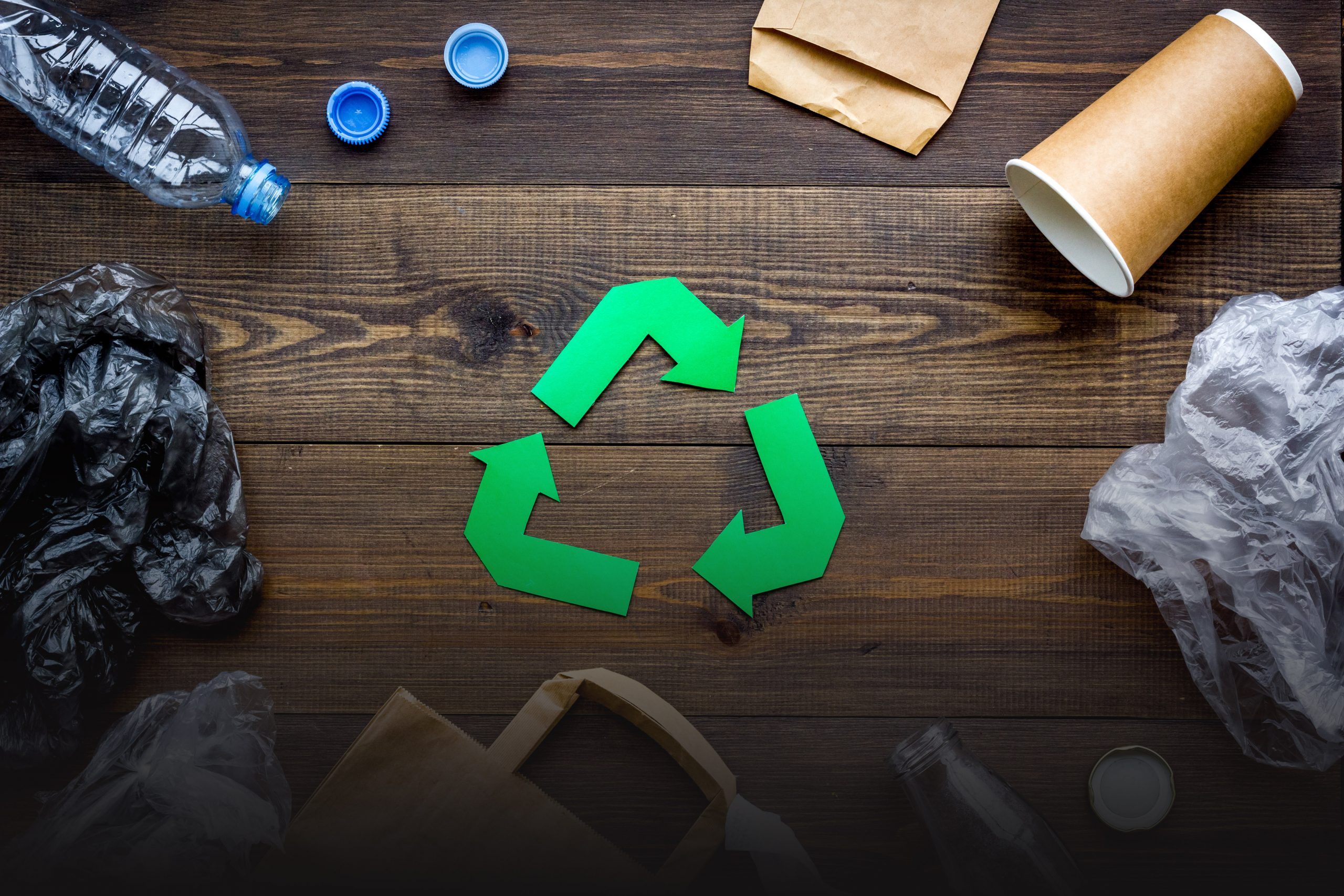
| Adobe stock photo
| Features
By Susan Landry
This year, as holiday shopping collides with a rapidly changing recycling industry and the increasing popularity of online purchases, local municipalities are dealing with a whole lot of trash. In fact, Americans produce an extra million tons of it each week from Thanksgiving to New Year’s. That’s a total of 25 percent more waste during the holidays than any other time of year, according to data from the Environmental Protection Agency.
Cardboard and plastic packaging are particularly abundant. “We call it ‘the Amazon effect’ in recycling. It’s really increased the amount of cardboard we receive,” said Tim Brownell, director of operations at Monterey Regional Waste Management District.
Cardboard now accounts for almost 40 percent of the total product received by the district, up from between 10 to 20 percent just two decades ago. That’s about 1,400 tons, or 2.8 million pounds each month. While Brownell noted that his district is able to find good buyers for cardboard materials, he said, “Incumbent with that, there’s a lot of bubble wrap, Styrofoam and other packaging materials that go inside the cardboard boxes and the predominance of that is not recyclable.”
Despite much of this plastic packaging having “recycle” symbols on it, a lot of it is no longer able to be locally processed, even when it’s thrown into the blue bin. In large part, this is due to China’s 2018 “National Sword” policy, in which the nation — previously handling half of the world’s recyclable waste — banned the import of many recycled goods, leading to a 99 percent decrease in its plastic imports.
“That really has impacted both the recycling markets, meaning the value we get paid for materials, but also the types of materials that can be accepted,” said Brownell, adding, “Most specifically, we’re seeing that change in regards to the different types of plastics.”
Currently, the district — which handles recyclables and waste at internal facilities — can only accept plastics numbered 1, 2 or 5. This includes things like plastic water bottles or laundry detergent containers, while items like Styrofoam (polystyrene), Solo cups and plastic film packaging no longer make the cut.
When these formerly recyclable items make their way to the facility now, they must be sorted out as “contamination,” costing extra time and labor, before ending up in the landfill anyway.
Amidst the changing times, several recycling centers across the Monterey Bay have closed up shop, leaving residents more reliant on their blue bins than ever. The Grey Bears team still operates three centers across Santa Cruz County, but no longer accepts items like newspapers, magazines and hard plastics because of “market restrictions.”
“There aren’t any buyers for that material currently and if there are, it’s probably not anywhere you want it to go,” said Grey Bears executive director Tim Brattan. Formerly, the Chanticleer Center filled a 40-yard container of plastics every two or three days. “Now, when all of a sudden they’re not taking plastics numbered 3 through 7,” Brattan said. “All of that plastic has nowhere to go. But we just can’t accept it.”
Grey Bears’ Chanticleer Recycling Center is one of the last places in SC County that’s still processing Styrofoam (polystyrene #6)—about 15 tons of it this year alone. “It’s a super successful program. The community is unbelievably grateful,” said Brattan. “Yet the jurisdictions and the county don’t want to support it.”
“What they’re hearing is that the recyclables they’re putting out there are just getting landfilled and that’s not true at all”
Tim Brownell, director of operations at Monterey Regional Waste Management District
Currently, Grey Bears is in negotiations with the county to try and extend funding it receives for the Styrofoam program, which is set to expire later this month. “If we don’t receive funding for that, we’ll have to think about no longer doing Styrofoam,” said Brattan. Without the extra funding, the center loses money on the program and as a nonprofit, Brattan said, “That just doesn’t work.”
GreenWaste, which handles much of the recycling in Santa Cruz County, is more lenient with what it’s willing to accept. On its website, GreenWaste notes that plastic items are “recyclable when markets exist.” Items like film plastics are currently being stockpiled by the company due to a lack of buyers, said Mary Ann LoBalbo, program coordinator and educator for Santa Cruz County’s Department of Public Works.
With all these changes, re-educating the public is a big undertaking, Brownell said. Currently, about 22 percent of what comes to the facility from residents’ blue bins is not recyclable, with non-recyclable plastics making up 6 percent of that total. Brownell noted that these numbers are measured by weight rather than volume, an important distinction because the plastics are, “incredibly light.”
In the city of Santa Cruz, contaminated or unclean recyclables like diapers or soiled food containers are an even bigger problem than improper sorting, according to Leslie O’Malley, the city’s waste reduction program manager. LoBalbo said that sometimes an entire truck of recyclables can be contaminated if one person puts in dirty items.
O’Malley explained that shipping contaminated items to China was a main driver in the nation’s decision to tighten regulations on what it’s willing to accept. While this decision sent shockwaves through the recycling industry, Brownell said it’s also creating more transparency in markets, which is actually a good thing.
“We’re not going to recycle our way out of this problem,”
Tim Brownell, director of operations at Monterey Regional Waste Management District
“Many of us in the industry, particularly on the recycling side, are actually happy that China took the steps that they took. It really broke open the issues around what is feasibly and practically recyclable,” said Brownell, adding that previously many “recyclables” shipped to China were completely unregulated, often ending up burned, discarded or landfilled anyway.
Now the district can’t accept everything it used to, but it can be sure it’s finding good, viable markets for the products it does accept, said Brownell. He adds that this is a common misconception among residents.
“What they’re hearing is that the recyclables they’re putting out there are just getting landfilled and that’s not true at all,” he said. “All of the materials we are separating as recyclable within the program have markets and are being made into new products. That is the success of it.”
In Santa Cruz, O’Malley said, “The city has always been fairly conservative of what we accept, relying on materials that have proven to have a consistent buyer and end market for us.” As for issues finding buyers, “Fiber (cardboard and mixed paper) is having almost as much trouble in the market as certain plastics,” she said. “Fiber takes a lot of water and generates a lot of emissions to recycle.”
When it comes to plastics, Brownell noted that a rapidly expanding source of cheap, virgin materials — largely byproducts of fracking for natural gas — could make it hard for recycled materials to ever compete in markets, an issue of particular importance in the Monterey Bay.
“We’re seeing microplastics in the water column from the floor to the shore of the oceans, right here in the bay. That problem is only going to increase if we see the generation of plastics continue to expand. We’re not going to recycle our way out of this problem,” he said.
Going forward, Brownell believes policy solutions and holding manufacturers accountable is critical. “Right now, no manufacturer has any responsibility for the products and packaging they’re producing and sending into our communities through commerce. It’s our municipalities and our homeowners who are responsible for the management of these materials. From a policy perspective, that has to be looked at,” he said.
For those looking to cut down on waste this holiday season, LoBalbo says that small changes like shopping locally or throwing a “waste-free” holiday party can make a big difference. While recycling is an important step, she said it’s important to first refuse, rethink and reduce excess packaging. If you can’t refuse it, “Try to repurpose as many times as possible and then recycle,” she said.
For Brattan, the most important change consumers can make is simple: “Don’t buy plastic stuff.”

Have something to say about this story? Send us a letter.
EVERY VOICE COUNTS, EVERY DOLLAR COUNTS | YOUR DONATION DOUBLED TODAY!